
In modern petroleum drilling engineering, as environmental regulations become increasingly stringent, the effective treatment of oily drill cuttings has become a focal point of the industry. As the core equipment of the Drilling Waste Management System, the cuttings dryer has become the key to achieving mud recovery and waste reduction through its superior solid-liquid separation performance. KOSUN offers advanced cuttings dryers engineered for high-efficiency solids control in demanding drilling environments.
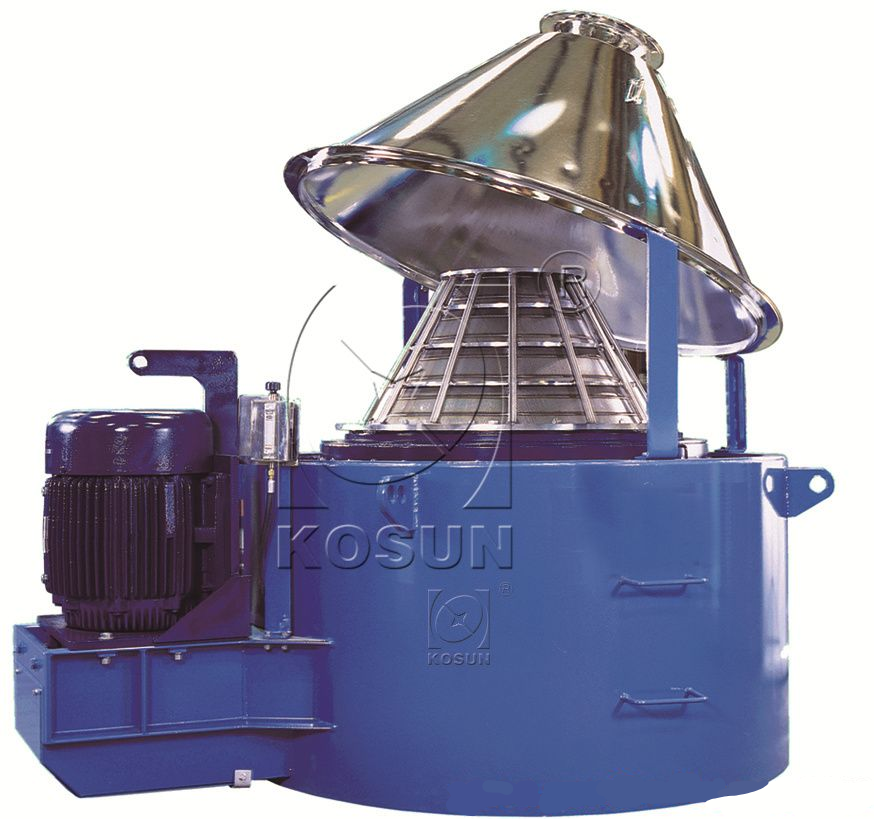
Definition and Application Scenarios of the Cuttings Dryer
A cuttings dryer (also commonly referred to as a vertical dryer or drill cuttings dryer) is primarily used to treat cuttings generated during drilling processes using Oil-Based Mud (OBM) or Synthetic-Based Mud (SBM). Its core objective is to strip and recover the liquid adhering to the surface of the cuttings using the immense centrifugal force generated by high-speed rotation. This process achieves solid-liquid separation, resulting in drier solids and a significantly reduced oil content on the waste. KOSUN’s cuttings dryers are designed for maximum fluid recovery and minimal waste volume.
Detailed Working Principle of the Cuttings Dryer
Feeding and Acceleration Phase
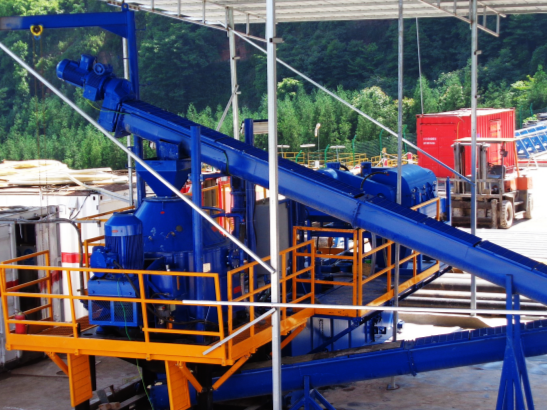
Oily drill cuttings are fed into the top inlet of the cuttings dryer via conveying equipment (such as a Screw Conveyor ). Upon entering the equipment, the cuttings drop into the center of the high-speed rotating basket (screen).
High G-Force Centrifugal Separation Phase
The rotor (containing the screen basket) rotates at high speeds, generating a centrifugal force (G-force) typically ranging from 300G to 900G . Under this intense force, the oil-based liquid adhering to the solid surfaces passes through the screen gaps and enters the liquid collection tank, while solid particles larger than the screen gaps are retained on the inner side of the screen.
Mechanical Scraping and Assisted Discharge Phase
To prevent solids from accumulating and clogging the inner walls of the screen, the cuttings dryer is designed with internal rotating flights (scrapers). There is a slight speed differential between the scrapers and the screen basket. This controlled differential operation scrapes the dried solids off the screen, allowing them to move toward the discharge outlet at the bottom of the equipment under the influence of gravity.
Liquid Recovery and Purification Phase
The expelled liquid phase (mud containing a small amount of fine particles) is discharged through the liquid outlet. Typically, this recovered liquid is sent to a downstream Decanter Centrifuge for further purification. Once ultra-fine particles are removed, the liquid is finally reintroduced into the active mud system for reuse.
Key Technical Parameters Affecting Cuttings Dryer Efficiency
To achieve optimal treatment results under the latest environmental standards, the following parameters are critical:
- Screen Gap: Typically selected based on the geological formation and lithology.
- Centrifugal Force: Higher rotational speeds yield greater centrifugal force and better dehydration; however, this places higher demands on the equipment’s dynamic balance and wear resistance.
- Scraper Wear Resistance: Since drill cuttings are highly abrasive, high-performance cuttings dryer scrapers are usually reinforced with tungsten carbide or other hard alloys to extend their service life.
KOSUN’s cuttings dryers are engineered with durable materials and precision components for long-term reliability in abrasive drilling environments.
Conclusion
Through efficient physical separation, the cuttings dryer not only solves environmental discharge challenges in oilfield operations but also saves drilling contractors significant material costs through high-ratio mud recovery. KOSUN is committed to providing high-performance cuttings dryers and expert support to help customers achieve their operational and environmental goals.