
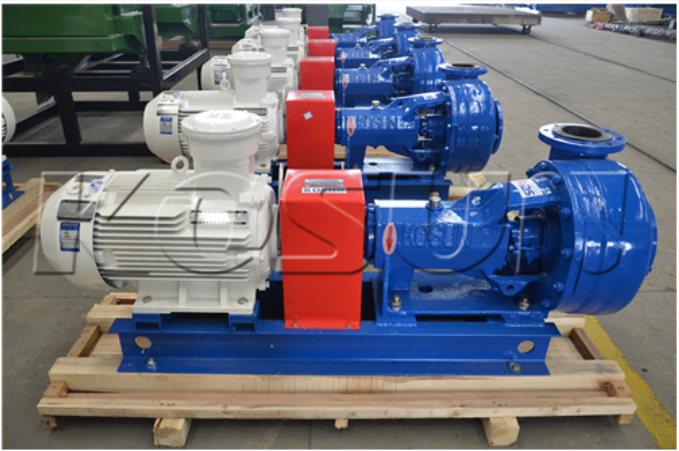
Cavitation ranks among the most destructive conditions a centrifugal pump can face. When local fluid pressure falls below the liquid’s vapor pressure, small vapor bubbles form inside the pump. These bubbles then collapse violently as pressure recovers, sending microscopic shock waves into metal surfaces. Over time, this process erodes impellers, damages casings, and shortens mechanical seal life — outcomes no drilling contractor can afford. Understanding what triggers cavitation and how to stop it is the first step toward protecting your pump investment. KOSUN offers centrifugal pumps engineered for reliable performance in demanding drilling environments.
Understanding Cavitation in Centrifugal Pumps
Before discussing prevention, it helps to know what cavitation looks like in the field. Too often, field teams miss early warning signs, turning a fixable problem into an expensive machine failure.
What Cavitation Looks Like
Cavitation in a centrifugal pump usually produces a rattling or cracking sound — often resembling gravel moving through the case. You may also notice erratic flow rates, fluctuating discharge pressure gauge readings, or visible vibration on the pump body. None of these are normal operating sounds.
How It Progresses
If cavitation pitting on impeller vanes and casing walls goes unaddressed, it worsens. Vibration pushes mechanical seal faces out of alignment, leading to leaks. Bearing loads rise. What begins as noise becomes structural damage that requires replacing the entire pump rather than servicing it.
Why It Matters for Drilling Operations
A centrifugal pump moves slurry between land rigs and offshore platforms, continuously handling rough, heavy fluids. Cavitation compounds the wear these fluids already cause, accelerating degradation far beyond what either problem would produce alone. Even a brief pump outage halts the drilling fluid circuit for mud engineers managing solids control systems.
Root Causes of Cavitation
Cavitation doesn’t appear without warning. It follows predictable patterns tied to fluid conditions, system design, and pump selection. To make the right fix, you need to pinpoint the exact issue in your program.
Insufficient Net Positive Suction Head (NPSH)
The leading cause is usually insufficient available NPSH — when suction-side pressure does not exceed the pump’s required NPSH by a safe margin. This can occur with long suction lines, excessive suction lift, clogged strainers, or high fluid temperatures. Industry standards recommend maintaining at least 3 feet of NPSH above the pump’s rated minimum.
Operating Away from the Best Efficiency Point
Every centrifugal pump has a Best Efficiency Point (BEP) on its performance curve — the flow rate where it operates most efficiently. Running significantly faster or slower than that flow rate alters internal pressure distribution and creates recirculation zones where vapor pockets form. Cavitation becomes a serious risk for pumps forced to operate outside their design conditions for extended periods.
Mechanical and Installation Factors
Worn impellers change internal clearances and reduce hydraulic effectiveness. Air leaks on the suction side, partially closed suction valves, or undersized piping can all restrict flow and lower local pressure. In the field — especially on mobile rigs or frac trucks — vibration can loosen fittings, admitting air and worsening cavitation behavior.
Practical Methods to Prevent Cavitation
Repairing is far more expensive than preventing. Cavitation can be stopped at its source through a structured approach covering system design, operating procedures, and equipment selection.
Optimize the Suction System
Keep suction lines short and straight. Use the largest practical pipe diameter on the suction side. Position the pump as close to the fluid source as possible, and clean suction strainers regularly. These steps raise available NPSH immediately — without modifying the pump itself.
Select the Right Pump for the Application
Off-BEP operation can be avoided when pump volume, head grade, and speed all match system requirements. As long as the centrifugal pump is properly sized for the solids control system’s flow range, it will spend most of its life near its most efficient point, where cavitation risk is lowest. KOSUN centrifugal pumps are built to handle slurry continuously, with open impellers and wide vane profiles that maintain stable fluid flow across a broad operating range.
Implement Routine Monitoring
Regularly checking suction pressure, discharge pressure, and sound levels can catch small problems early. Handheld acoustic monitoring instruments can detect the characteristic cavitation sound at low levels before damage occurs. Maintaining an accurate operating log also helps identify slow performance changes that may signal wear or system drift.
Design and Material Considerations
Hard iron and high chrome metals outperform standard cast iron against the combined attack of abrasive slurry and cavitation-induced pitting. KOSUN centrifugal pumps are available in hard iron , high chrome , aluminum bronze , and stainless steel — giving sourcing teams material options matched to fluid type and wear severity.
An open impeller lowers axial thrust loads, while an impeller retention bolt prevents impeller damage during brief reverse rotation. Wide-vane design improves fluid passage and reduces low-pressure zones where vapor bubbles form. For heavy-duty applications, KOSUN centrifugal pumps feature back vanes on the rotor that prevent solids buildup near the stuffing box and lower internal case pressure, further reducing cavitation likelihood.
Troubleshooting a Suspected Cavitation Event
When noise or performance loss appears, inspect the suction side first — verify valve position, filter condition, and suction line integrity. Then compare the operating point against the pump curve. If the system has changed — flow requirements, longer pipe runs, or different fluid density — adjust NPSH margins before assuming the pump has failed.
Procurement Checklist
When specifying centrifugal pumps, prioritize:
- Material construction matched to fluid abrasiveness and pH
- Hydraulic performance curves verifying BEP covers your operating range
- Seal options and spare seal lead times
- Spare parts compatibility across pump sizes
- 24/7 technical support, especially for offshore or remote sites
These requirements lead directly to fewer unexpected shutdowns and lower total cost of ownership.
Conclusion
Cavitation in a centrifugal pump is preventable through correct system design and proper equipment selection. The essentials are suction head margins, operating point accuracy, material durability, and routine monitoring — principles that apply equally on land, offshore, or on mobile rigs. KOSUN manufactures centrifugal pump lines designed for continuous slurry service in demanding oil and gas environments. Choosing a pump built for your specific conditions — backed by responsive technical support and readily available replacement parts — is the most reliable way to keep mud flowing smoothly for the long term.