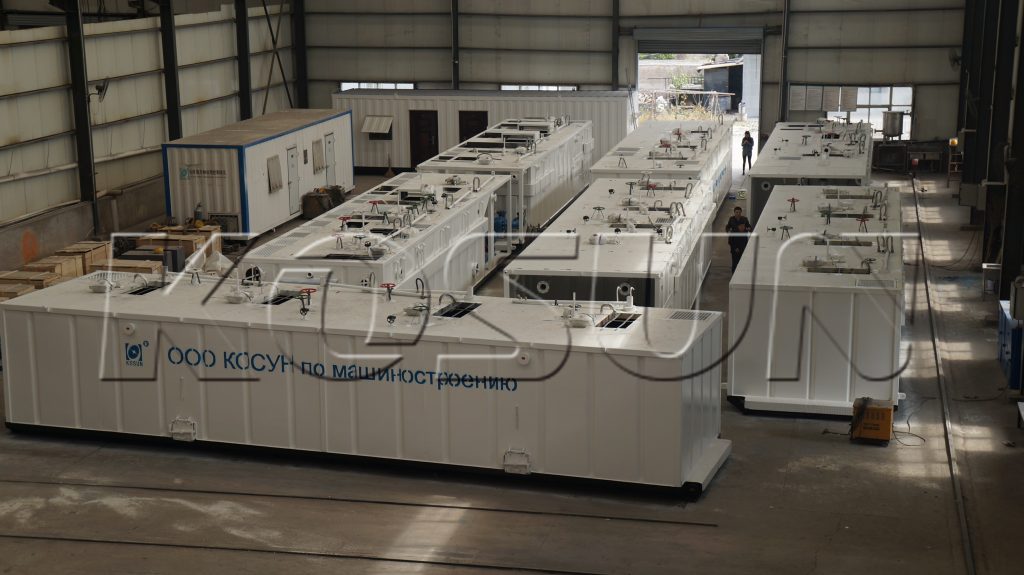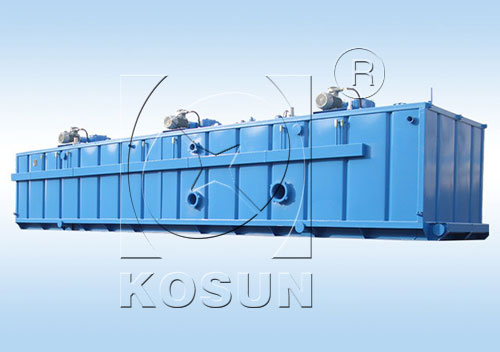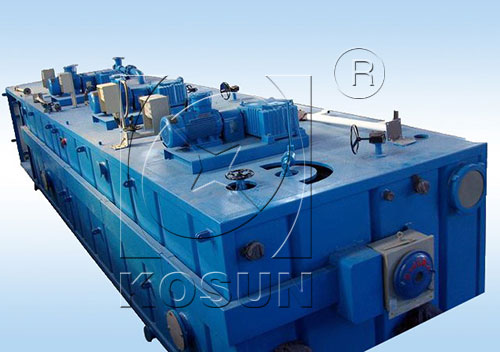
In the field of drilling operations, efficiency, accuracy, and safety are of utmost importance. The mud tank is one of the key components to ensure the smooth operation of the drilling platform. In this paper, we discuss the significance, function, and characteristics of oil rig mud tanks and reveal the importance of mud tanks for drilling rigs in the oil and gas industry. KOSUN offers high-performance mud tanks engineered for reliable drilling fluid management in demanding environments.
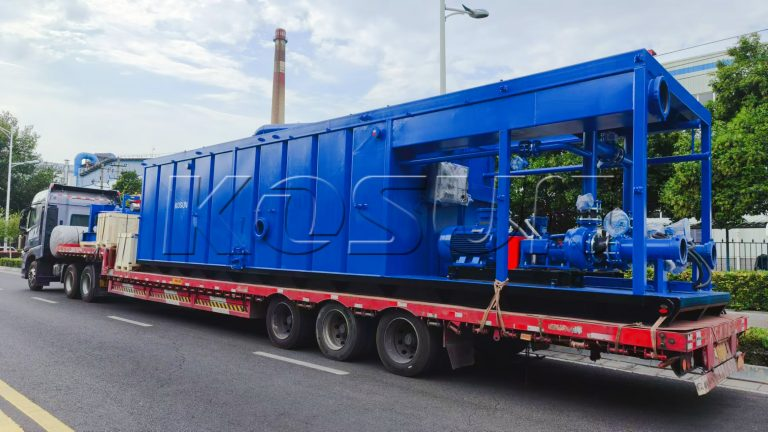
Understanding the Mud Tank System
Mud tanks are specialized containers for the storage and circulation of drilling fluids (also known as drilling mud) during drilling operations. These tanks are designed to withstand the rigors of the drilling site and facilitate the management of drilling fluids throughout the drilling process.
The drilling mud tank is the main storage container for drilling fluids, which can hold the large amount of mud required for drilling operations. It also helps in the mixing and blending of drilling fluids to ensure the uniformity and consistency of mud composition. Mud tanks contain mechanisms for separating solids, such as linear motion shale shakers and decanter centrifuges , to maintain the quality and performance of drilling mud. In addition, some advanced mud tank systems include heating and cooling elements to regulate the temperature of the drilling fluid, optimize its performance, and improve drilling efficiency.
Internal Structure of a Drilling Mud Tank
A drilling mud tank is composed of a tank body, mixing device, discharge port, and feed port.
-
Tank Body
The body of the mud tank is a sealed container, usually made of welded steel plates. The tank has different shapes such as round, oval, or square, and the size also varies according to the specific use needs. The inner wall of the tank is generally treated with anti-corrosion to prevent the corrosion of the mud on the tank.
-
Mixing Device
A mixing device is provided inside the mud tank for mixing mud to keep it in a uniform mixing state. The stirring device is usually composed of a motor, a reducer, and a stirrer. The motor transmits power through the reducer to the agitator, which rotates the mud to keep the solids suspended and prevent them from settling at the bottom of the tank.
-
Discharge and Feed Ports
The mud tank is provided with a discharge port and a feed port for the discharge and entry of mud. The discharge port is usually located at the bottom of the tank and drains the mud through a pipe to the next treatment unit. The feed port is usually located at the top of the tank, and the fresh mud is injected into the tank through the pipe. The location and size of the discharge and feed ports are determined according to the specific design requirements in order to achieve effective mud flow and handling.
We usually add a sand pump beside the tank to provide power to transport mud, and sometimes we have a jet mud mixer to mix the mud.
Conclusion
In the dynamic world of drilling operations, mud tanks are an indispensable asset, providing the necessary infrastructure to effectively manage drilling fluids. From storage and mixing to separation and temperature control, drilling rig mud tanks play a multifaceted role in ensuring the success and safety of drilling operations. With the development of drilling technology, the importance of well-designed and reliable solids control equipment has increased, and it is the backbone of the oil and gas industry as it seeks energy exploration and production. KOSUN is committed to providing high-performance mud tanks and expert support to help customers achieve their operational goals.