
Modern drilling engineering requires high-performance drilling fluid. This fluid stabilizes wellbores. It also carries cuttings efficiently. Operators rely heavily on high-cost polymers. They also use bentonite clays. However, a common industry pain point arises during mixing. Conventional centrifugal pumps lack mechanical force. They cannot disperse these additives fully. As a result, undissolved polymer clusters form. Engineers call these sticky lumps “fish eyes.” They block shale shaker screens quickly. This issue wastes expensive materials. It also degrades overall mud properties. To overcome these mixing inefficiencies, the shear pump serves as a highly specialized engineering solution.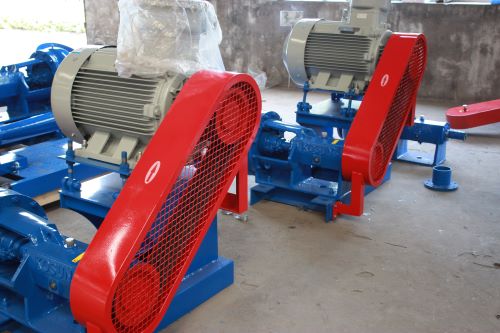
How a Shear Pump Operates in Solids Control
A drilling solids control system manages fluid properties sequentially. It relies on a multi-stage process. Shakers, desanders, and desilters remove harmful drilled solids. Meanwhile, the mixing section reconstructs fluid rheology. Inside the loop, the shear pump integrates strategically into the conditioning phase. It typically works in tandem with a jet mixer. The device does not merely transport fluid. Instead, it utilizes a specially engineered impeller. It also uses a shearing plate combination. The raw slurry passes through the high-speed rotor-stator architecture. Then, the fluid experiences intense, localized mechanical forces. This rapid energy transfer breaks down macro-molecular chains. It also destroys particle agglomerations. Consequently, water molecules penetrate into the core of each clay particle faster.
Field Advantages of the Shear Pump Architecture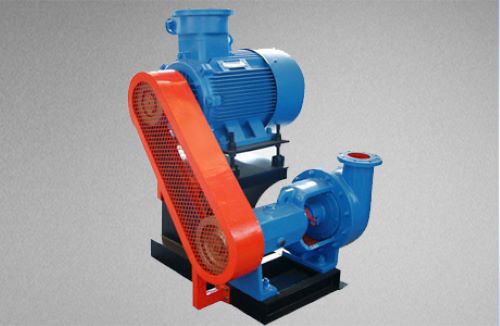
Drilling operations achieve three quantifiable improvements by transitioning to high-shear processing:
-
- Accelerated Hydration: The mechanical shearing action reduces chemical dilution time. It speeds up full hydration. Therefore, crews mix high-performance mud rapidly and accelerate spud-in readiness.
- Material Cost Savings: The system eliminates undissolved clusters completely. It optimizes soil particle hydration. Therefore, it ensures that every kilogram of additive remains active. Field data demonstrates bentonite savings of over 30%. This directly lowers mud-building costs.
- Enhanced Hydraulic Capacity: The system features an optimized power-to-flow ratio. It offers larger capacity. It also provides higher lift. Concurrently, this keeps sufficient hydraulic energy in the mud loop to meet deep-well circulation demands.
Ultimately, preventing material waste enhances a well’s overall economic yield. Shortening mud preparation intervals also drives efficiency. For drilling contractors, upgrading to this engineered shear pump system represents a highly reliable operational decision.